Aluminium Copings vs Concrete: Why Specifiers and Installers Are Making the Switch
23 July 2026
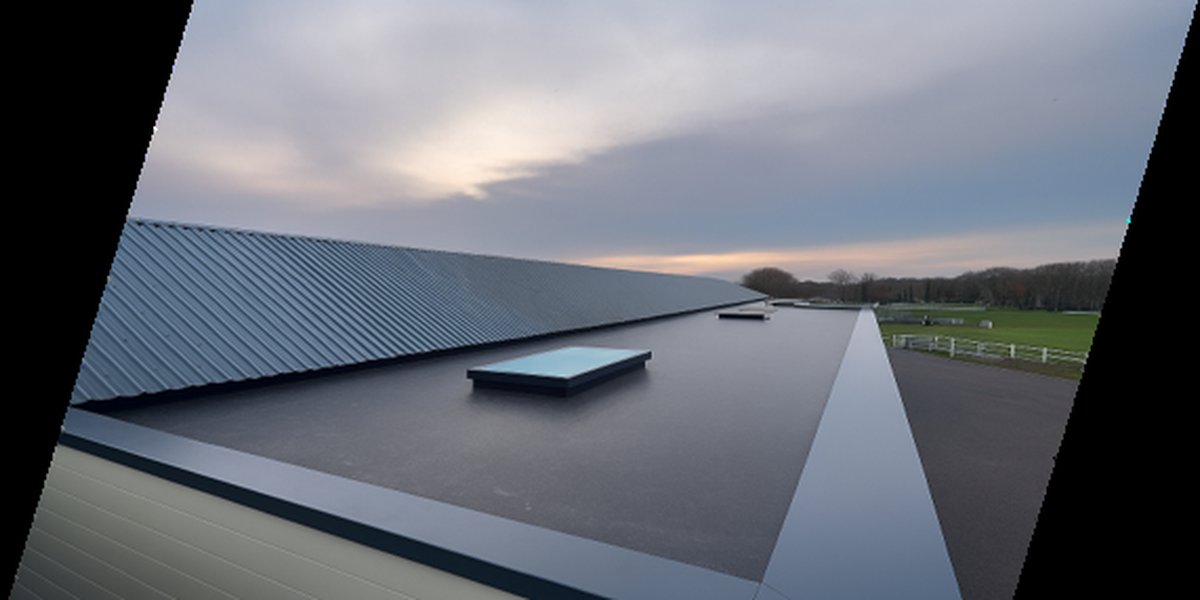
Parapet copings take some of the hardest punishment on any building envelope. Sitting exposed at the top of a wall, they're hit by driving rain, UV, freeze-thaw cycles, and constant thermal movement — all while being relied on to keep water out of the structure below. Concrete or stone has been the default choice for decades, largely on cost and habit. But when you compare it head-to-head with modern aluminium coping systems, the case for aluminium is hard to ignore.
Here's why more contractors and specifiers are moving away from concrete.
1. Waterproofness: Aluminium Doesn't Absorb Water
Concrete is porous. Even with a good mix design and a drip detail, it will absorb water over time — and that water finds its way into every hairline crack, joint, and shrinkage fissure. Once moisture gets into concrete, freeze-thaw cycling does the damage: water expands as it freezes, widening cracks, spalling the surface, and eventually exposing reinforcement to corrosion.
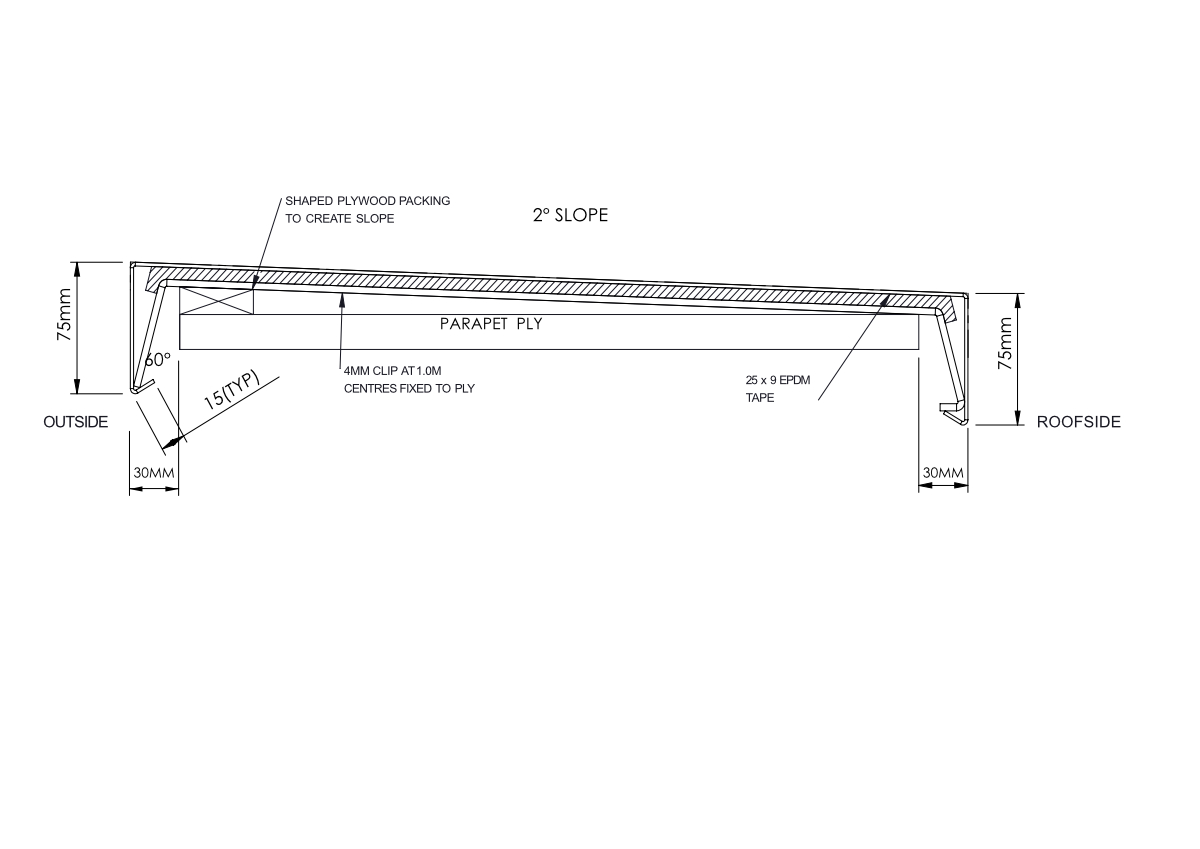
Aluminium coping is a fully engineered, factory-formed metal profile. It doesn't absorb water at all. Combined with a properly designed joint system (typically a snap-fit or drive-cleat fixing with concealed splice plates and butyl seals), an aluminium coping sheds water completely rather than letting it soak in and migrate downward into the wall build-up. There's no porosity for water to exploit — the failure mode that defines concrete coping simply doesn't exist.
2. Colorfastness: No Efflorescence, No Fading Patchwork
Anyone who's walked past an older concrete coping run will recognise the white, chalky staining known as efflorescence — mineral salts leaching out of the concrete as moisture moves through it. It's unsightly, it's very difficult to remove permanently, and it tends to get worse with age, not better.
Aluminium coping is typically finished with a polyester powder coating, factory-applied under controlled conditions. These finishes are UV-stable, don't leach minerals, and hold colour consistently across the full run — critical when you're matching a coping to a curtain wall system, fascia colour, or corporate branding. A powder-coated aluminium coping installed today will still look essentially the same colour in fifteen years; painted or bare concrete very rarely does.
3. Ease of Fitting: Lighter, Faster, More Forgiving
Precast concrete coping units are heavy. That means mechanical lifting on anything beyond small units, more time on site, and a genuine manual handling risk for installers working at height on scaffolding or a parapet edge. Bedding and pointing joints is also a wet trade — weather-dependent, slower to complete, and reliant on the skill of whoever's on the trowel that day.
Aluminium coping systems are designed around speed of installation. Lightweight extruded or folded sections can be handled by one or two people, fixed mechanically onto a continuous cleat or sub-frame, and joined with concealed splice plates rather than wet jointing. No mortar, no curing time, no weather windows to work around. On a live commercial roof or refurbishment project, that difference in programme time is significant — and it reduces the number of trades and site visits needed to close the wall head off.
4. Thermal Bridging: Concrete Conducts Cold Straight Through the Wall
This is the one that often gets missed until a building's in use and condensation or cold spots start showing up internally. Concrete is a relatively poor insulator and a good thermal conductor compared to the insulated wall build-up it sits on top of. A solid concrete coping spanning the full wall width — especially where it isn't thermally broken from the substrate — creates a direct cold bridge from outside to inside.
The practical result is localised heat loss, a higher risk of interstitial condensation within the wall, and in some cases visible cold-spot staining or mould growth on the internal face below the parapet.
Aluminium coping systems, properly detailed, sit on a sub-frame or cleat system that can incorporate a thermal break (a low-conductivity isolator between the metal and the structure) and typically leave an air gap and separate insulation zone rather than bridging solid material through the wall. The coping itself is also far thinner in section than a precast concrete unit, so there's simply less conductive mass making contact between outside and in. Where thermal performance is being modelled as part of a building's overall U-value or condensation risk analysis, this difference matters.
5. Weather-Tightness at Abutments and Wall Width Transitions
Real buildings are rarely a single, constant wall thickness from end to end — piers, movement joints, changes in cavity width, and abutments against adjacent structures are the norm. This is where concrete coping struggles most: each transition typically needs a bespoke cast unit or an awkward site-cut, and every extra joint is another place for water to find a way in. Sealant-only junctions at these points are a known long-term maintenance liability — sealant degrades, and once it fails at a width transition, water tracks straight down into the cavity.
Aluminium systems handle this far more gracefully. Because the coping is formed from lengths of extruded or folded profile rather than fixed precast units, width transitions, stop-ends, and external/internal corners are made using purpose-formed pressings and mechanically jointed adaptors — not wet-sealed site improvisation. A well-designed system will have standard components for stepped or tapered width changes that maintain a continuous, mechanically fixed water path with the drip and overhang detail preserved right through the transition. That means fewer reliance points on sealant alone, and a genuinely weathertight junction even where the wall below it isn't a constant width.
The Bottom Line
Concrete coping is cheap to buy and familiar to specify, but it carries hidden costs: water ingress over time, unattractive efflorescence, heavier and slower installation, a thermal bridge that undermines the wall's insulation performance, and weak points wherever the wall width changes. Aluminium coping costs more up front but is engineered to solve all five of these problems at once — and on a building envelope, avoiding a water ingress or thermal bridging problem years down the line is worth far more than the initial saving.
For most modern specifications — particularly on insulated cavity walls, curtain walling, and any project where long-term performance and appearance matter — aluminium coping isn't just the premium option anymore. It's the sensible one.
Looking for aluminium coping systems for your next project? Get in touch with our team to discuss standard profiles, bespoke width transitions, and finish options to match your specification.